
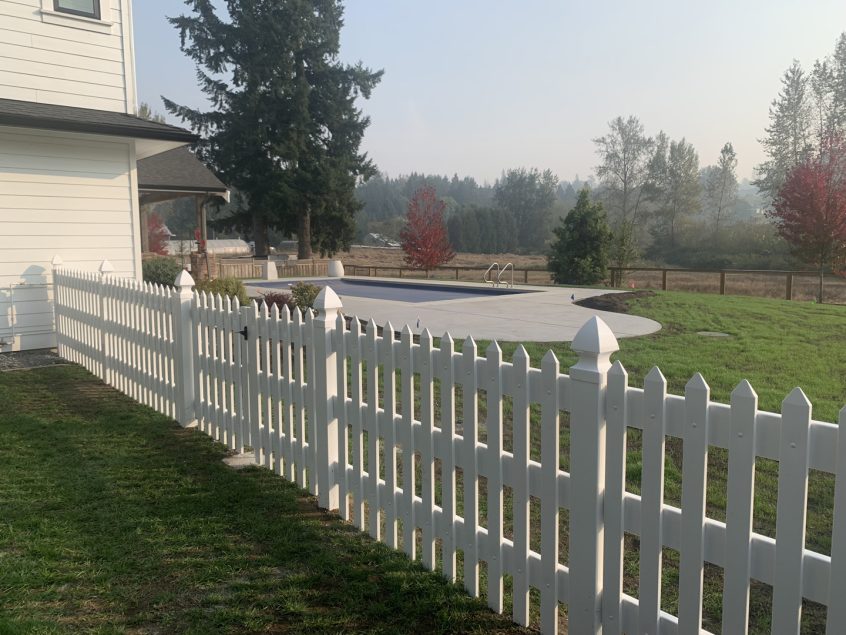
If you’re looking to install a vinyl fence, it’s important to note that not all fencing companies offer the same product or vinyl fence installation services. That said, in this article, we’ll explore four different post-installation methods for your new vinyl fence and discuss some basic information regarding fence construction.
Posts: Fence Installation Basics
With BC’s weather conditions, planning your fence installation correctly is vital for its structural integrity. Annually, we experience 70-90 km/hr winds and deep freeze-thaw cycles that can have an effect up to 18 inches into the ground on average. It is recommended that vinyl fence posts be set a minimum of 24 inches below the surface in order to avoid any instability issues.
Remember: how a vinyl fence post is installed can make all the difference when enduring our extreme climate.
The Evolution of Fence Post Installation
The Standard Vinyl Install:
The standard vinyl installation is a simple way to put up a vinyl fence. It starts by putting the vinyl fence posts straight into the ground. Like with other fence posts, you begin by setting up a string line and making sure the posts are straight in the spot where you want them. After that, you can pour in concrete mix or use granular aggregate that packs down tightly to hold the posts in place. Some companies may also cut small slits in the posts walls in an effort to secure posts from vertical movement.
Since vinyl doesn’t rot like wooden fence posts, this method works fine. But remember, vinyl posts are hollow, which means they aren’t super strong. If enough pressure is put on them, the bottom of the post where the vinyl meets the ground can act like a lever, and the post might break there.
The Wood Insert:
The first solution to help strengthen vinyl fence posts was installing a wood insert. This method uses a wood post placed inside the vinyl post, usually stopping just below the bottom rail. The goal was to make the post stronger and move the pressure point higher up, reducing the chance of it snapping.
Later, a new idea came along using 3/4 inch aggregate instead of wood. This kind of rock filler helps support the post while letting it bend under pressure without one set fulcrum point. It’s also cheaper than wood, but it takes more work to install.
Next, some vinyl extruding companies increased post wall thickness by about 1/16th of an inch, though the difference only made significant marketing differences rather than notable strength.
The Cadillac:
The best version, sometimes called “The Cadillac” of vinyl fence installations, uses galvanized steel posts, plastic collars, and vinyl sleeves. This combo makes a stronger structure than the other methods and can be easier to install when using pre-cut vinyl pieces.
This method is almost always used when putting up a vinyl fence on concrete. It includes a mounting plate and fasteners. The plastic collars help fix any leaning caused by an uneven surface, so the posts stay straight.
What Matters Most
As you research the optimal fence post installation techniques for your vinyl fence, remember that what matters most is completing the installation accurately. Doing so will protect against our fluctuating climate and keep your fence looking great long term. With guidance from industry experts, like Frontline Fencing and some thorough research, picking an installation method can be easy.
We wish you good luck with the process. You’ve got this!
Need a Hand? Book a Consultation with Frontline Fencing today!
FAQs
- What should I consider when choosing a vinyl fencing company?
When you’re spending money on high-quality vinyl fencing, you want a company that knows what they’re doing. The fence installers should explain the installation process clearly and confidently. That way, you’ll feel good knowing your vinyl fence will be built to last.
- How long does the average vinyl fence installation take?
There’s no exact time; it depends on a lot of things. Things like the type of soil, any obstacles on your property, or even leftover concrete from old posts can all slow things down. Even with perfect conditions, professional fence installers usually don’t get more than 100 feet of fence done in a day. And let’s be honest, when building something from scratch, you can always expect the unexpected.
- Does a better post-installation method affect my warranty?
Most vinyl product warranties don’t talk about different installation methods. They only cover problems with the materials. The company that installs your fence might offer a workmanship warranty, but that’s separate. Using a stronger post-installation method is a smart choice, but it won’t change the fence’s warranty coverage.