
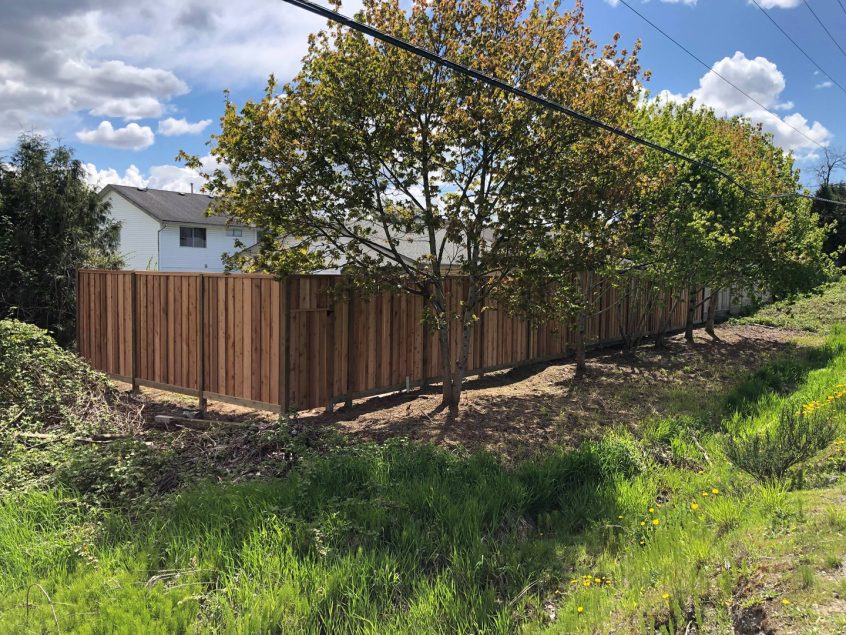
There is nothing quite as beautiful as a cedar fence on your property. Once you have invested in it, and to keep it lasting as long as possible, though quite resistant to decay, you must preserve it. To preserve its appearance and structure, regular maintenance is key. This means choosing to paint or stain your wood fence over time.
Choosing between paint and stain as your treatment method depends on several factors. These factors include: aesthetics, durability, and long-term protection. Let’s compare the pros and cons of painting vs. staining your cedar fence, so you can make an informed decision about your wood fence and keep it looking and functioning at its best for longer.
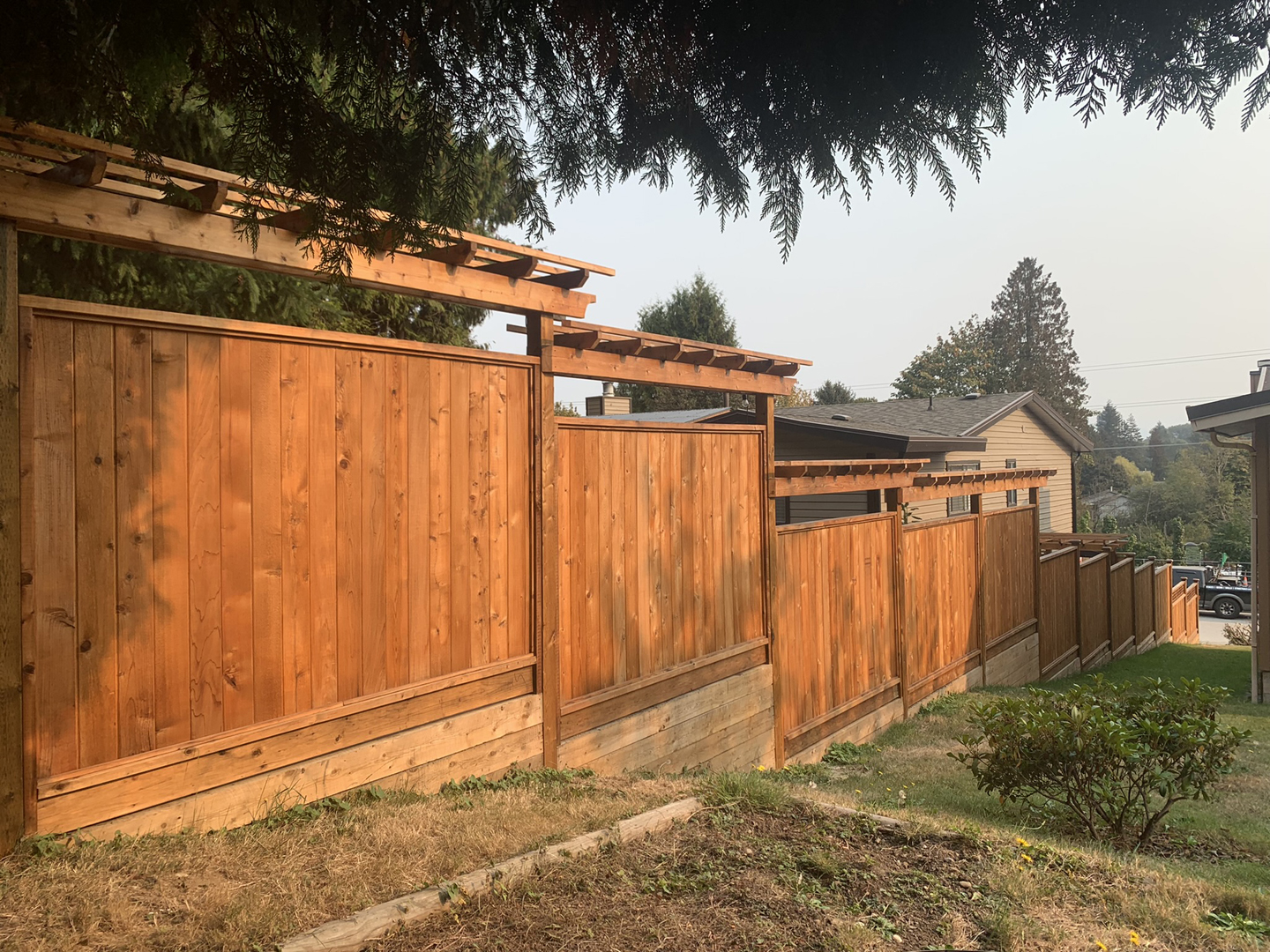
What’s the Difference Between Staining and Sealing a Cedar Fence?
Staining and sealing are often confused because they both aim to protect and extend the life of your fence. However, they serve different purposes.
Stain goes into the actual cedar wood; this enhances its natural beauty while also helping manage moisture and UV exposure. Sealing, typically done with paint or other coatings, forms a protective barrier on the surface of the wood.
Let’s take a closer look at each treatment type.
Painting a Cedar Fence
Painting will provide a protective layer that shields your fence from the natural elements. It also gives you the option to play with colour. You can completely change the colour of your fence to match or contrast with your home, or make it a “white picket fence” should you wish. You have a lot more options with colour, which is great if you want to do a refresh (just add a fresh coat).
However, fence paint can trap moisture under its surface, which may lead to peeling or premature rot. This is especially true if the wood fence isn’t properly prepped or sealed at vulnerable junctions. Extreme temperatures can cause the paint to crack, and maintaining a painted fence may require frequent touch-ups.
Pros and Cons of Painting Your Wood Fence
Pros:
- Creates a strong protective layer against water, UV rays, dirt, and debris
- Unlimited colour options to refresh your wood fence’s appearance
Cons:
- Prone to cracking as cedar expands and contracts
- It can trap moisture, not always good at repelling moisture, which can lead to rot
- Requires frequent maintenance and reapplication
Staining a Cedar Fence
For a more natural look, staining enhances the existing colour and wood grain of your cedar fence. A quality cedar fence stain will offer strong UV protection while allowing the wood to breathe and move with seasonal changes. In general, cedar fence stain is easier to apply and maintain, especially on a rough wood fence with vertical panels.
Staining won’t hide imperfections the way paint does, but it offers superior adhesion and weather tolerance when used with proper preparation. For best results, always clean your wood fence thoroughly, allow it to dry, apply an even coat using either a brush or sprayer, and wipe off all extra product. Depending on the stain type, you may need at least two coats for a long-lasting, durable finish. You can also opt to re-stain as you need.
Pros and Cons of Staining Your Wood Fence
Pros:
- Allows cedar to breathe and adjust to the weather
- Enhances the natural beauty and classic look of the wood
- Easier to maintain with minimal surface prep required
Cons:
- Limited to natural wood tones and fewer colour options
- Won’t cover imperfections on older or weathered wood
- Wood will become a darker color over time as it ages
Quick Tips for a Long-Lasting Finish
Before you start painting or staining, review the weather forecast and avoid rainy or humid conditions that could affect drying time, remove any loose screws, and consider a light sanding if the surface is too coarse. If you’re unsure about the right stain or fence paint, trusted brands like Sherwin-Williams, Benjamin Moore, and Behr offer a wide selection designed for cedar and wood fences.
Always follow the manufacturer’s instructions and apply a first coat carefully using vertical strokes on vertical panels and horizontal strokes on horizontal panels; essentially following wood grain. If needed, apply a second coat for consistent coverage and longer-lasting results.
The Best Treatment Option for Your Cedar Fence Depends on Your Needs and Preferences
It really comes down to personal preference, your maintenance expectations, and how you want your cedar fence to look over time. If you want a bold colour and are ready for occasional upkeep, painting may be a better option. If you prefer minimal upkeep and want to highlight the natural beauty of your western red cedar, staining is the right choice.
No matter which treatment you choose, working with professionals ensures a smooth application, long-lasting durability, and a cedar fence that continues to look its best year after year.
Need help choosing the best treatment? Contact Frontline Fencing today to schedule a free estimate.
If you’re looking for a reliable and cost-effective way to protect your cedar fencing, contact Frontline Fencing today! Get in touch with our experts now, schedule a free estimate, and find out why Frontline Fencing is the go-to choice!
FAQS
Should I use western red cedar if I plan to stain the fence?
Western Red Cedar is one of the most beautiful and durable lumber options available in the Lower Mainland and the Okanagan. We will always recommend you stay with this as it is born, grown, and made for the BC Climate.
How long should I wait before painting or staining a new cedar fence?
Generally, wait at least a few weeks for the cedar to dry and season. The timing may vary depending on weather conditions and the moisture content in the wood.
How do I clean a cedar fence before staining or painting?
Use a mix of water and mild detergent, or a wood cleaner, and a brush or pressure washer to clean the fence. This removes dirt, insect damage, and any stubborn stains.