Are you looking to upgrade your outdoor space, perhaps creating a vegetable garden, or needing to build a new fence? Whatever the case, you will be faced with deciding on using pressure-treated wood or cedar lumber.
There are advantages and disadvantages to using both (pressure-treated wood or western red cedar), so it mainly comes down to the key factors and specific circumstances before deciding on what fencing materials suit your home improvement project best. These considerations include what works with your home’s exterior, environmental impact, economical choice, durability, maintenance, and more.
In this article, we review pressure-treated wood vs. cedar fence material to help you decide which lumber will make the superior choice for your outdoor applications.

Defining Both Fencing Materials
Let’s back up and take a look at what is pressure-treated vs cedar wood.
Pressure-treated wood has been treated with chemical preservatives. This is done in order to minimize insect infestation, making it more durable, more resistant to rot and decay, and typically having a longer lifespan.
On the other hand, Western red cedar (cedar wood) is an untreated softwood that has natural resistance to weather. This is due to its natural oils and resins.
Both cedar and pressure-treated wood can be used for various landscaping projects, such as building cedar fences, retaining walls, and other landscaping.
Unique Benefits and Drawbacks of Pressure-Treated Wood
The primary advantage of using pressure-treated material is cost. When looking to build fences, retaining walls, or garden boxes, pressure-treated wood offers a more budget-friendly option. It also has a longer lifespan because it is chemically treated, so more durable and less susceptible to decay or insect damage. Unfortunately, pressure-treated products may be concerning to many homeowners due to the use of harmful chemicals in the treatment process.
Here’s a summary of the pros and cons of using a pressure-treated wood fence:
- Cost
- Pressure-treated wood is relatively inexpensive compared to cedar.
- Ideal for homeowners and contractors seeking a budget-friendly solution.
- Lifespan
- Treated with chemicals that increase resistance to rot and decay.
- Suitable for long-term projects.
- It can last up to 40 years, depending on factors like weather, wood species, use, and environment.
- Health Risks
- Treated with chemicals that may pose health risks if inhaled or ingested.
- Not recommended for use around food sources due to potential exposure.
Unique Benefits and Drawbacks of Western Red Cedar
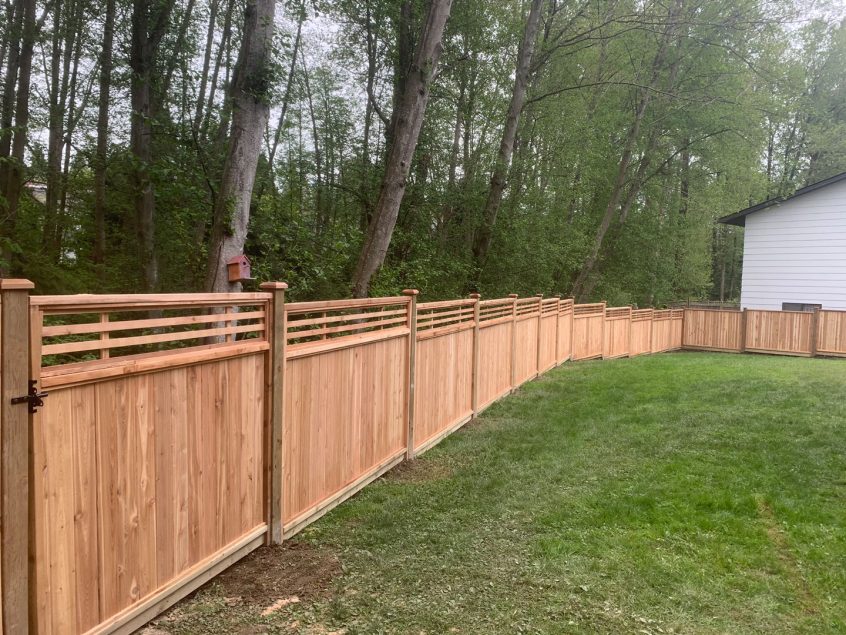
Western red cedar lumber is more expensive. However, it is known to be a “healthier” option because it has not been pressure-treated with chemicals. Instead, it has natural weather-resistant qualities that also contribute to durability. Cedar lumber does have the ability to resist rot and decay, though maybe a shorter life span than pressure-treated wood. In addition, cedar lumber is often preferred for its aesthetics. It has a stunning reddish-brown colour, which makes it popular in outdoor living spaces or a high-end looking cedar fence.
Here’s a summary of the pros and cons of using a Western Red Cedar fence:
- Resilience
- Naturally resistant to rot and decay due to its oils and resins.
- Ideal for outdoor use in direct sunlight, rain, and harsh weather conditions.
- Colour
- Distinct reddish-brown hue offers natural beauty and a high-end aesthetic appeal.
- A popular choice for fences, walls, and garden boxes.
- Safety for Consumables
- Free from chemical treatments, making it safe for growing fruits, vegetables, and herbs.
- Preferred option for garden boxes and other food-related projects.
- Cost
- Significantly more expensive than pressure-treated wood.
- Often reserved for visible or top-tier components, such as fence boards, rather than posts.
Pressure Treated Vs. Western Red Cedar Lumber – Which is the Best Option for Your Landscaping Project?
When it comes to landscape projects, the choice between pressure-treated lumber and western red cedar depends on a variety of factors such as cost, longevity, and safety. Pressure-treated lumber is an affordable option for those looking for a budget-friendly solution with good lifespan qualities. Although pricier, Western red cedar is the preferred choice for its positive health impacts and stunning aesthetic.
It comes down to personal choice, your project, and your budget.
If you are looking to build garden boxes or an area where consumables are considered, using cedar boards may be the best option.
If you are building a fence, and looking for budget-friendly options but still high-end, you can use pressure-treated materials for the posts but cedar boards for the high parts of the fence.
For all projects, asking an experienced contractor is recommended so that you can rest assured you are making the best choice for your property.
If you’re in the Lower Mainland or Okanagan and looking for a contractor for your cedar fencing needs, or have any other landscaping projects, contact Frontline Fencing Ltd. for your free estimate today!
FAQs
What kind of wood is used for posts when installing cedar fence panels?
In British Columbia, pressure-treated hemlock is used the most frequently for fence post installation.
What are the advantages of cedar over pressure-treated lumber for landscaping?
Cedar has several advantages over pressure-treated lumber, such as its natural ability to resist rot and decay due to its oils and resins, and its attractive reddish-brown colour. It’s also the better choice, due to safety, in gardens with consumables like fruits, vegetables, and herbs.
How long does cedar last?
Depending on weather conditions, species of wood, the intended use, or the surrounding environment of the cedar, it can have a lifespan of up to 40 years when untreated.