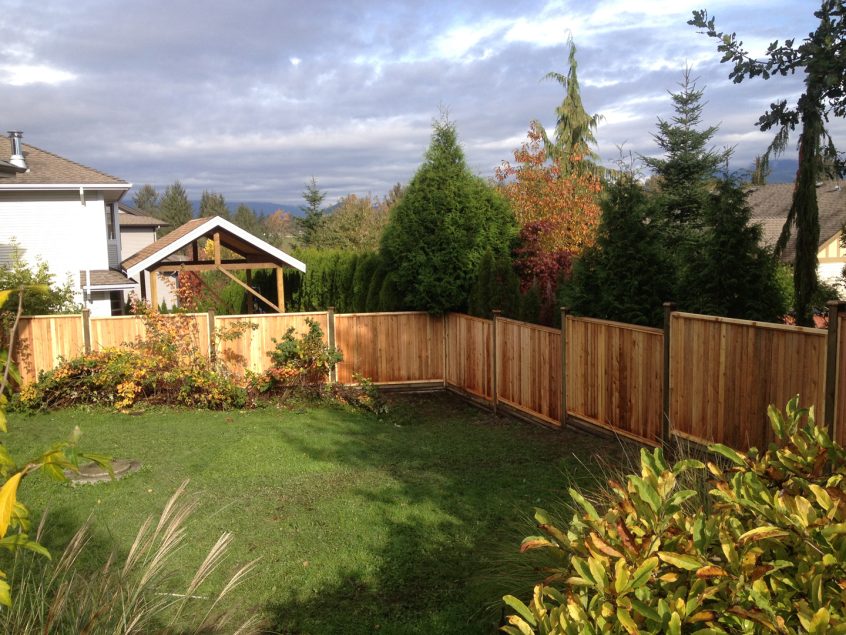
If you live in the Lower Mainland and you’re thinking about getting cedar fencing, or already have it, you might be surprised to learn that not all cedar wood is created equal. And if you’ve got a cedar allergy, this is definitely something you’ll want to pay attention to.
Unfortunately, some contractors might cut corners and install lower-quality wood, or even pass off other types of wood as cedar just to save money. That’s not just bad for your health, but it can affect how long your fence lasts and how good it looks, too.
In British Columbia, especially around Okanagan, Vancouver and across the Lower Mainland, cedar is a popular material for fencing, decking, and custom structures because it holds up so well in our diverse wet/dry climate and looks great in any backyard or garden design. However, there are actually several different “cedar types” out there, and not all of them are ideal for every project. If you’re upgrading your outdoor living space, knowing what kind of cedar you’re dealing with can make a huge difference.
Before you commit to a new fence, it is important to understand the common cedars used in fencing, and be sure to ask your contractor the right questions. The right wood means better quality, fewer allergy problems, and a fence that adds real value to your home.
The 4 Most Common “Cedars” Used in Cedar Fence Panels
Western Red Cedar:
This type of wood is a popular choice for outdoor projects where rot resistance really matters. Think cedar fencing, decking, siding, shingles, and even boats. It’s a solid pick for homeowners across the Okanagan and the Lower Mainland because it withstands dry and wet climates quite well.
You can usually spot Western Red Cedar by its rich colour and distinctive scent. It has a warm, reddish-brown to medium brown hue in the heartwood (which is the stronger, grade 1 wood), while the sapwood, typically lower-grade (grade 2 or 3), leans more toward a pale yellowish-white. If you get close enough, you’ll notice a sweet, woodsy aroma that’s actually kind of pleasant. Believe it or not, if you were to taste it (though we don’t recommend it!), It’s slightly bitter.
Take a look at the grain. On the tangential face (that’s the long side of the board), you’ll see mostly straight but sometimes uneven grain lines. If you’re choosing between grades, knowing what to look for in colour and grain can really help you get the most value and performance from your cedar fencing.
Alaskan Yellow Cedar:
It’s known for being tough, naturally resistant to decay and most insects, so it’s often used in boatbuilding, outdoor furniture, decking, and yes, fencing.
On the surface, it has many of the same perks as Western Red Cedar, but there are a few key differences you’ll want to know before making a decision to purchase. First off, you’ll notice that it has a similar colour to the sapwood, which makes it difficult to distinguish from it. Sapwood has pale yellow to whitish shades, whereas Alaskan yellow cedar can show up similarly. That makes it a bit trickier to grade by appearance alone; you’re mostly looking at knot quality when judging boards. If you’re shopping for cedar fencing in the Lower Mainland, especially for a custom structure or detailed garden design, that uniform colour might be a pro or a con, depending on your style.
The smell, though? That’s where Alaskan Yellow Cedar really sets itself apart. Unlike the sweet, woodsy aroma of Western Red, this stuff smells more like raw potatoes. Not exactly what you’d call “pleasant.” Plus, some people experience skin irritations when handling or cutting it, so if you’re sensitive or have common airborne allergies, including a cedar allergy, this is definitely something to flag with your contractor.
Chinese Cedar:
Commonly known as “China Fir,” it refers to a tree that grows in abundance throughout the nations of China, Laos, and Vietnam. It is known to have a pleasant aroma similar to cedar; some say it can smell like tomatoes. This lumber is less resistant to decay and weathering, and that’s why we don’t recommend it for use in outdoor structures like fencing. The wood tends to become more easily damaged and is very vulnerable to cracking. The wood has a light yellow tone, and its grain looks more like pine than true cedar.
Given the big differences in climate and environment between BC and China, it’s not surprising that this wood doesn’t measure up to our native cedar. The name ‘cedar’ is likely used to ride on the reputation of our well-known and trusted local species.
Japanese Cedar:
Commonly known as “Sugi Cedar”. It is similar to most cedar, where the wood is soft, light, aromatic, and resistant to decay. It looks similar to a Western Red and is hard to spot any differences at first glance. However, if you are prone to allergies, you may notice the Japanese cedar right away!
Sugi sawdust has been linked to a variety of allergies. While in Japan, the pollen from the tree itself is noted as being highly allergenic. Individuals who are exposed to the dust or wood itself may experience unpleasant reactions such as respiratory distress or skin irritations. Therefore, caution should be taken when coming into contact with this substance and its byproducts, especially for those who are sensitive or allergic.
This lumber is used for service in traditional Japanese woodworking methods, limiting toxic reactions and increasing product resiliency. Such methods include using hand tools and techniques that limit airborne particulates, charring the material black for exterior uses, which increases its fire and rot resistance, and a Japanese technique known as “shou sugi ban”. Ultimately, there are better-suited options for a cedar fence.
Comparing Western Red Cedar, Chinese Cedar, Alaskan Yellow, and Japanese Sugi Cedar for Cedar Fencing.
When it comes to building a quality cedar fence in British Columbia, Western Red Cedar is hands-down the top choice. It’s naturally resistant to rot, insect damage, and moisture. It’s perfectly suited to our wet, coastal climate of Vancouver and the Lower Mainland. Its strength, durability, and not to mention beautiful colour make it ideal for fencing, decking, and custom outdoor structures.
On the other hand, Chinese Cedar (China Fir) might work for indoor or decorative applications, but it simply doesn’t hold up well outdoors. It’s more prone to cracking and weather damage.
Japanese Cedar (Sugi) has a lovely aroma and can be stunning when used in traditional architecture, but it’s not commonly used for fencing here. It’s especially harsh for individuals who have cedar allergies and don’t always perform well in our environment.
Alaskan Yellow Cedar can be a good alternative and is naturally durable, but it can cause allergies, and the cost can be higher for minimal benefit compared to Western Red.
So if you’re planning to install a new fence, Western Red Cedar is the winner. It’s trusted by homeowners and pros alike for a reason.
If you’re looking to install a new cedar fence in Vancouver, the Okanagan, or the Lower Mainland, or need help with decking and custom structures, we’d love to help. Frontline Fencing specializes in quality fencing, honest advice, and top-of-the-line materials. Your outdoor space deserves the best. Contact us today for a free estimate, and let’s bring your cedar fencing project to life.
To get in contact with your local fencing company, click here
FAQS
What is the best type of wood for cedar fence panels here in BC?
Western Red is the best choice for a fence panel in BC, as it is naturally durable and resistant to decay and native insects.
Is Alaskan Cedar lumber suitable for cedar fence panels?
Although it is resilient enough for BC fence installations, it is an inferior wood to western red cedar and considerably overpriced in comparison.
Is it possible to be allergic to my new cedar fence panels?
Yes, some fence installation companies may not inform you of the species of cedar used for your cedar fence. Japanese Sugi Cedar sawdust has been linked to a variety of allergies, while in Japan, the pollen from the tree itself is noted as being highly allergenic.