Thinking about installing a new cedar wood fence? Or maybe you’ve already noticed a few unexpected gaps in your existing fence panels? If so, you might be dealing with something many homeowners in British Columbia experience: cedar shrinkage.
Here’s the thing: Cedar is a fantastic wood material for fences. It’s naturally resistant to decay, looks beautiful, and fits right in with the West Coast style. But like any natural wood, cedar wood shrinks as it dries. This isn’t necessarily a problem, unless it catches you off guard. The one thing about shrinkage is that it can impact the privacy of your fence, affect the look of your fence, and sometimes even mess with how your gates or panels function.
In this blog post, we’ll walk you through what cedar shrinkage really is, why it happens, how it can affect your cedar fence panels, and most importantly, how to prevent or minimize the impact of shrinkage. If you’re planning to build a wood fence for your Okanagan or Vancouver backyard, or you’re just trying to fix up your current one, this guide is for you.
Let’s break it down so your cedar fence stays strong, private, and good-looking for years to come.
Defining Shrinkage in Cedar Fence Panels
Unseasoned & Seasonal Shrinkage
Shrinkage is a natural process that occurs in cedar material and various types of wood. It is caused by the moisture content, which changes over time, or in other words, the climatization from unseasoned to dry lumber. As the cedar wood loses its moisture content, it can shrink in size. When it comes to the Western Red type, unseasoned to dry cedar, it can shrink anywhere from 1/32 to 1/4 of an inch, depending on the nominal dimensions.
When it comes to cedar fence boards, shrinkage doesn’t just happen in one direction; wood moves in different ways as it dries. Here’s a simple breakdown:
- Tangential shrinkage: happens across the wide face of the board; basically, the board gets slightly narrower.
- Radial shrinkage: affects the thickness of the wood, shrinking between the front and back faces.
- Longitudinal shrinkage: is the least noticeable, and it happens along the length of the board, from end to end.
The Implications on Cedar’s Appearance & Function
When Western Red cedar lumber shrinks, it can cause gaps between cedar boards in the fence panels.
The resulting gaps may create:
-
A Loss of Privacy
Due to the change in cedar board width, some cedar fence panels may not provide the desired level of privacy. If cedar boards are too thin or spaced too far apart, and gaps between cedar boards become noticeably visible, the cedar fencing may not be as effective at providing privacy as anticipated.
-
Appearance Changes
Your fence’s appearance may change over time. If you choose solid cedar fence panels to protect your outdoor living space, gaps in the fence can give the appearance that your fence is falling apart or not doing its job.
-
Hindrance of Function
The moisture content of cedar when it’s installed plays a big role in how well your gate functions over time. If the wood is cut to fit perfectly while it’s still wet (unseasoned) or even when it’s extra dry, it can shift as the moisture levels change. That shrinkage and swelling can throw things off. It can affect your gate, making it either too tight, too close or too loose and saggy in the frame. It’s a small detail that can have a big impact on how well your cedar gate works.
Mitigating the Effects of Shrinkage in Cedar Fencing
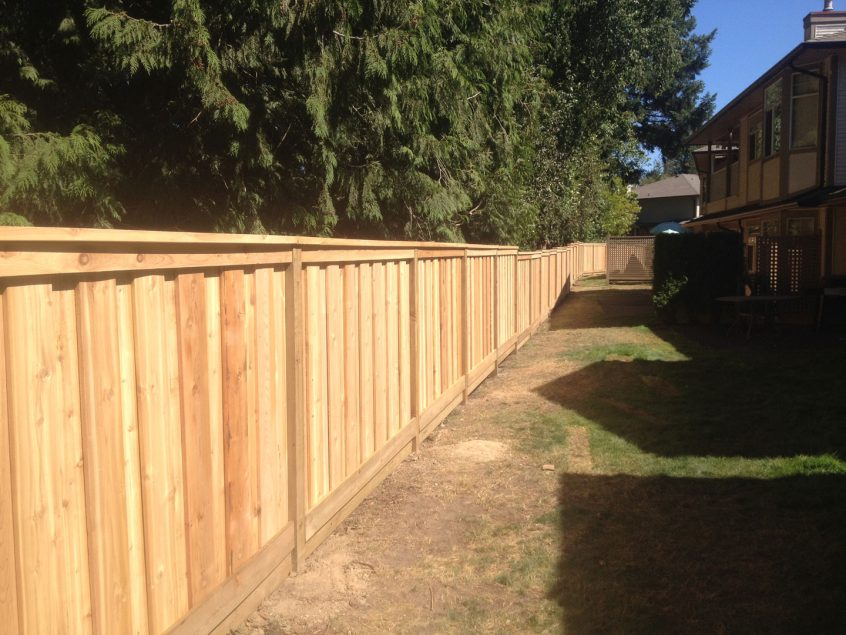
The implications of shrinkage in cedar can be mitigated, or in some cases eradicated, by a change in fence quality, design, and lumber grade. Choosing a fence design that allows for shrinkage, like an overlap style installation, can hide the imperfections better than standard fence panels‘ “tongue & groove” boards. Also, using high-quality lumber, like heartwood that holds less moisture, or applying regular stain applications, which also limits drastic moisture changes, will minimize the overall shrinkage.
Avoiding Shrinkage Issues When Choosing Cedar Fencing for Your Property.
Any homeowner or strata property manager who is considering installing a cedar fence should consider the effects of shrinkage. With careful planning and consideration, any property owner can ensure their cedar fencing will provide privacy, security, and an aesthetically pleasing property boundary for years to come.
If you are looking for a free estimate for your next custom fence or fencing project in the Lower Mainland, the Okanagan, and Greater Vancouver area, contact Frontline Fencing Ltd. Our experienced team of professionals can provide quality installations that will stand the test of time. Our goal is to minimize the effects of shrinkage and maximize your fence’s lifespan. Call Frontline Fencing today to get started on your dream cedar fence!
FAQS
What is cedar fence shrinkage in BC?
Shrinkage is a natural process that occurs on cedar material, as well as many other kinds of wood. It is caused by changes in moisture content or climatization from unseasoned to dry lumber. As the Western Red cedar loses its moisture content, it can shrink in size, which can affect the appearance and function of a fence.
How does cedar shrinkage affect your property’s curb appeal?
When Western Red cedar lumber shrinks, it can cause gaps between wood boards in the fence panel, resulting in a loss of privacy due to the change in cedar board width. If cedar boards are too thin or spaced too far apart, and gaps between cedar boards become visible, the fencing may not be as effective at providing ultimate privacy as initially anticipated. This can affect the overall curb appeal of the property.
How can I reduce shrinkage in my private fence?
The implications of shrinkage in a wood fence can be mitigated or even eradicated by a change in fence quality, design, and lumber grade. Choosing a fence design that allows for shrinkage, like an overlap style installation, can hide the imperfections better than standard fence panels ‘tongue & groove’ boards. Using heartwood that holds less moisture can also help minimize shrinkage. Lastly, use protective coatings like oil-based wood stains, which help moderate moisture content.